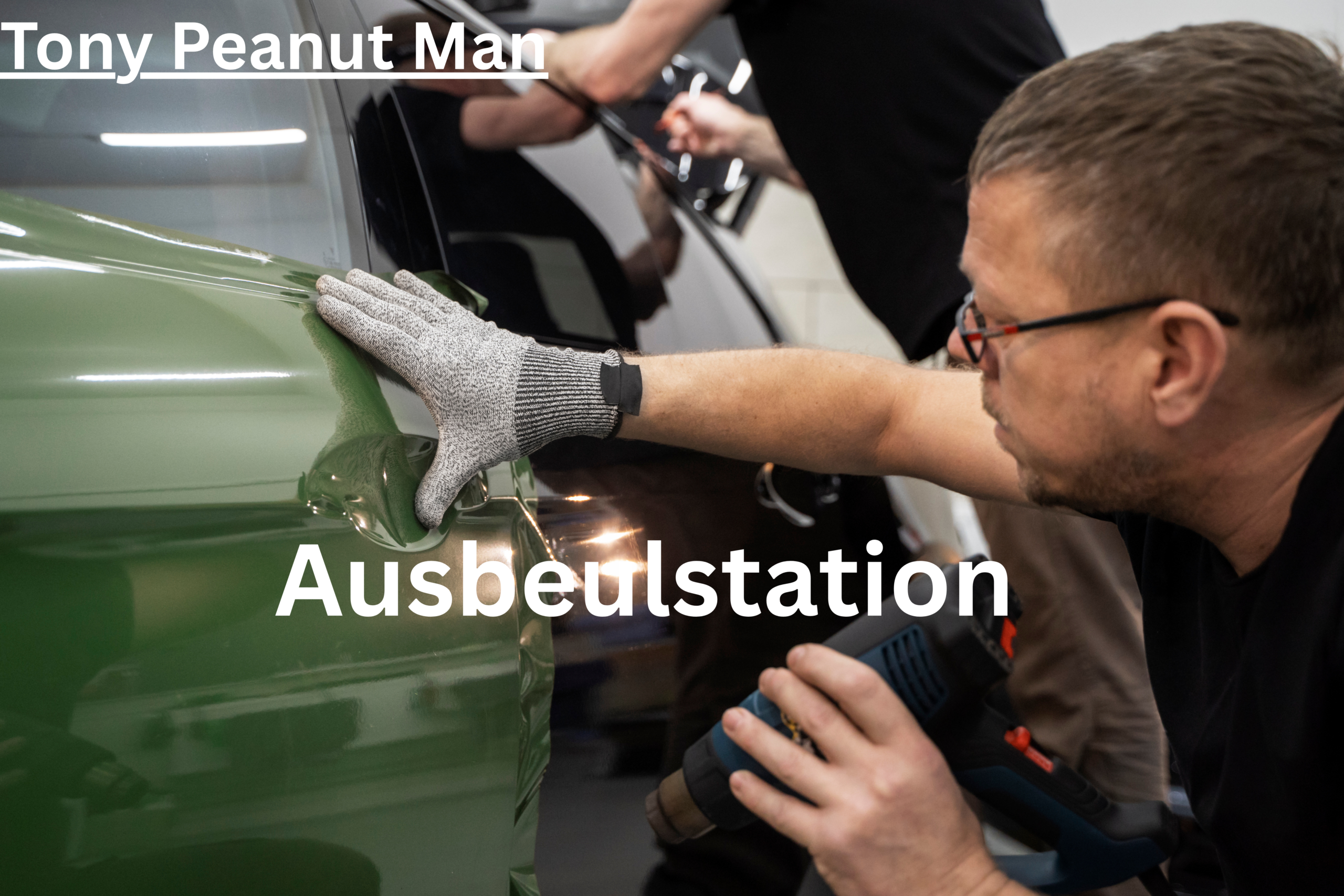
Ausbeulstation: Modern Paintless Dent Repair Services
Ausbeulstation services have become an essential solution for dealing with minor body damage. From parking lot mishaps to unexpected hailstorms, dents and dings can quickly affect a vehicle’s appearance and resale value. While traditional repair methods required sanding, fillers, and repainting, modern methods offer faster and more efficient alternatives, often restoring vehicles without disturbing the original paint
The term comes from the German language and literally translates to “dent removal station.” However, in practice, it represents far more than a simple repair shop. An Ausbeulstation is a specialized facility focused primarily on removing dents from vehicle bodies—often without the need for repainting. Using advanced techniques such as Paintless Dent Repair (PDR), these stations provide a cost-effective, environmentally friendly, and value-preserving solution for vehicle owners.
What Is an Ausbeulstation?
It is a specialized automotive repair service dedicated to removing dents, creases, and minor body damage from vehicles. Unlike traditional body shops, which may handle structural repairs, repainting, and major collision damage, it primarily focuses on cosmetic surface restoration.
The key difference lies in the method used. Instead of sanding down damaged areas, applying filler, and repainting the surface, technicians at an Ausbeulstation typically use Paintless Dent Repair (PDR) techniques. This method preserves the original factory paint while restoring the metal to its original shape.
It typically handles:
- Minor accident dents
- Hail damage
- Parking lot dings
- Door impacts
- Small creases
- Leasing returns cosmetic repairs
The goal is simple: restore the vehicle’s original appearance quickly and efficiently without invasive procedures.
The Origin and Evolution of Dent Repair Services on Ausbeulstation
Traditional Dent Repair Methods
Historically, repairing a dent involved a multi-step and time-intensive process:
- Sanding down the damaged area
- Applying body filler
- Reshaping the panel
- Priming and repainting
- Blending paint with adjacent panels
While effective, this process had several drawbacks. It was costly, time-consuming, and could reduce the originality of the factory paint finish.
Emergence of Paintless Dent Repair (PDR)
Paintless Dent Repair emerged as a revolutionary alternative. Though its origins trace back to automotive manufacturing plants, it became widely adopted in Germany and Europe before expanding globally. Technicians realized that many minor dents could be removed by carefully reshaping the metal from behind the panel without damaging the paint.
As demand grew, specialized repair centers—Ausbeulstations—became more common, particularly in regions prone to hailstorms.
Expansion Across Europe and Beyond
Over time, the concept evolved from fixed workshops to mobile repair units. Today, many Ausbeulstations offer on-site services, visiting customers at home or workplaces. The service has become especially popular in leasing-heavy markets, where cosmetic perfection matters at contract return.
How Paintless Dent Repair (PDR) Works
The Technical Process
The PDR process requires exceptional precision and skill. Technicians begin by evaluating:
- Dent size
- Dent depth
- Metal tension
- Paint condition
- Panel accessibility
If suitable for PDR, the technician gains access to the backside of the dented panel. Using specialized rods and tools, they gently apply controlled pressure to massage the metal back into its original shape.
To ensure accuracy, technicians use LED reflection boards or specialized lighting. These lights reflect across the panel, highlighting distortions in the surface. As the metal is reshaped, the reflection lines gradually return to their original straight pattern.
Glue Pulling Technique by Ausbeulstation
In cases where the backside of the panel is inaccessible, technicians use a glue pulling method. This involves:
- Attaching a special adhesive tab to the dent
- Using a pulling device to lift the dent outward
- Carefully tapping down high spots
This technique requires careful control to avoid paint damage.
Finishing and Inspection
Once reshaped, the panel undergoes fine-tuning to eliminate micro-imperfections. The goal is to restore the surface to near-factory condition, often making the repair virtually invisible.
Types of Damage Handled by an Ausbeulstation
An Ausbeulstation typically handles damage that does not involve broken paint or structural compromise.
| Damage Type | Description | Why PDR Is Suitable |
| Hail Damage | Hailstorms can leave dozens—or even hundreds—of small dents across a vehicle’s surface. | The dents are usually shallow and do not crack the paint, making them ideal for paintless dent repair. |
| Parking Lot Dents | Door impacts from neighboring vehicles are among the most common causes of minor dents. | These small surface dents typically do not damage the paint, allowing easy correction through PDR. |
| Minor Accident Damage cover by Ausbeulstation | Low-speed collisions can cause shallow body dents without severe creasing. | When structural components are unaffected, PDR can restore the panel without repainting. |
| Transport Damage | Vehicles may suffer dents during shipping or dealership handling. | PDR efficiently corrects cosmetic damage while preserving the original factory finish. |
| Leasing Return Preparation | Vehicle owners often remove dents before returning leased cars to avoid penalties. | PDR restores cosmetic appearance quickly and cost-effectively, helping avoid additional lease charges. |
Benefits of Choosing an Ausbeulstation
Cost Efficiency
Because no repainting or filler is required, material costs are significantly reduced. Labor time is also shorter, resulting in lower overall repair expenses.
Faster Turnaround
Small dents can often be repaired within a few hours. Even hail damage cases may be completed much faster than traditional bodywork.
Preservation of Factory Paint
Maintaining the original paint finish is critical for resale value. Factory paint is applied under controlled conditions that are difficult to replicate perfectly in repair shops.
Environmentally Friendly Approach of Ausbeulstation
Traditional body repair uses chemicals, paints, and fillers that produce waste and emissions. PDR avoids these materials, making it a more sustainable option.
Higher Resale Value
Buyers and dealerships often prefer vehicles with original paint. PDR helps maintain authenticity, which can positively impact market value.
When to Choose an Ausbeulstation
An Ausbeulstation is ideal when:
- The paint is intact
- The dent is shallow
- The metal is not overstretched
- Structural components are unaffected
If these conditions are met, PDR is usually the most efficient solution.
When a Traditional Body Shop Is Necessary
Despite its advantages, PDR is not suitable for all damage types.
A traditional body shop may be required when:
- The paint is cracked or chipped
- The dent has sharp folds
- The panel is torn
- Structural components are bent
- Airbag systems are affected
Major collision damage typically exceeds the scope of an Ausbeulstation.
Cost Factors of Ausbeulstation Services
Pricing varies depending on several factors:
Dent Size and Depth
The size and depth of a dent significantly affect the repair process. Larger dents or those that penetrate deeper into the metal require more time, precision, and careful reshaping. Deep dents may also involve stretched metal, which makes restoration more technically demanding and can increase the overall repair cost.
Location on the Vehicle
The position of a dent plays an important role in determining repair difficulty. Dents located near panel edges, body lines, or reinforced structural areas are more challenging because the metal in these sections is stronger and less flexible. Repairing these areas requires greater skill and specialized tools.
Accessibility of Ausbeulstation
Accessibility refers to how easily a technician can reach the backside of the damaged panel. If direct access is limited due to internal components or tight spaces, the repair becomes more complex. In such cases, additional techniques like glue pulling may be required, which can increase labor time.
Number of Dents
The total number of dents directly influences pricing and repair time. A single dent can often be repaired quickly, but vehicles affected by hailstorms may have dozens or even hundreds of small dents. Multiple repairs require systematic work across the entire vehicle surface, which increases the overall effort and cost.
The Role of Technology in Modern Ausbeulstations
Technology plays a crucial role in precision dent removal.
| Technology / System | Explanation |
| LED Reflection Systems | High-intensity lighting systems help technicians detect even subtle surface distortions, ensuring precise and accurate dent removal. |
| Digital Damage Assessment | Some repair centers use advanced digital imaging tools to evaluate and estimate damage before starting the repair process. |
| Mobile Repair Units | Fully equipped mobile workshops allow technicians to provide dent repair services directly at the customer’s home or workplace. |
| Insurance Integration | Many Ausbeulstations collaborate closely with insurance providers, helping streamline claims and simplify the repair approval process. |
Quality Standards and Professional Skills
PDR requires patience, dexterity, and training. Unlike traditional bodywork, which may rely on filler to mask imperfections, paintless repair demands exact metal reshaping.
Professional technicians often undergo:
- Specialized PDR training programs
- Hands-on apprenticeships
- Continuous skill refinement
The difference between average and expert repair often lies in subtle finishing work.
The Future of Ausbeulstation Services
The demand for paintless dent repair (PDR) and Ausbeulstation services continues to grow for several reasons. With more consumers leasing vehicles, there is an increased need for cosmetic repairs before contract returns, as minor dents must often be removed to avoid penalties. Environmental awareness also plays a role, with sustainability concerns favoring low-waste repair methods that avoid fillers, paints, and chemicals. Additionally, advancements in automotive materials, such as aluminum and high-strength steel, have led PDR techniques to adapt, allowing technicians to restore a wider variety of panels without damaging the factory finish.
Finally, the growth of mobile services adds convenience, enabling technicians to perform repairs directly at a customer’s home or workplace, saving time and increasing accessibility.
Conclusion
An Ausbeulstation represents a modern, efficient approach to automotive dent repair. By specializing in paintless dent removal techniques, these repair centers offer faster, more affordable, and environmentally conscious solutions compared to traditional body shops.
From hail damage to parking lot dents, the services provided by Ausbeulstation help preserve a vehicle’s factory finish and resale value. While not suitable for severe collision damage, paintless dent repair remains the ideal solution for minor cosmetic imperfections.
As technology advances and consumer expectations evolve, they are likely to play an increasingly important role in the automotive repair industry—offering precision restoration with minimal disruption.